 EN
EN  ES
ES 
Hurd Introduces Productive Public Lands Act
By Mason Osgood
March 20, 2025

Photo Credit: Mason Osgood
Rep. Hurd Targets Public Land Management in Colorado with New Legislation
SAN MIGUEL COUNTY, Colo. — Congressional Representative Jeff Hurd has introduced legislation aimed at dismantling public land management plans across Western Colorado.
The Productive Public Lands Act, introduced by Hurd on Monday, March 10, seeks to restore public lands across the West to a path of “energy dominance,” a term popularized by former President Donald Trump.
The legislation would rescind several Biden-era Bureau of Land Management (BLM) plans in Colorado, including in San Miguel County. Local officials warn the move could undermine decades of collaboration and investment in public land conservation.
San Miguel County Natural Resources and Climate Resiliency Director Starr Jamison briefed the Board of County Commissioners on Wednesday, March 19, about the potential local impacts of Hurd’s proposal.
“So how this affects San Miguel County,” Jamison said, “we were cooperating agencies for the Big Game Habitat Conservation for Oil and Gas Management, as well as the Gunnison Sage Grouse [Record of Decision and Resource Management Plan].”
Over the past three years, San Miguel County has worked with federal agencies and neighboring counties to craft management plans for big game habitat corridors and protections for the endangered Gunnison sage grouse, a bird endemic to the region.
The Gunnison Sage Grouse Management Plan, finalized late last year, aims to protect the species from oil and gas development, recreation, and mining. While the bird’s main population resides in Gunnison County, a satellite population inhabits Dry Creek Basin in western San Miguel County.
“In our county, in the Tres Rios [Field Office], we had an area of critical environmental concern in Dry Creek Basin,” Jamison said. “With this bill, that would be rescinded. That was 10,000 acres.”
San Miguel County also contributes to a collaborative grouse working group focused on habitat restoration.
“San Miguel County has financially contributed between $1.4 and $1.6 million during the period,” Jamison said. “This was taken from 2017 numbers, so since then we’ve actually contributed more than that, specifically towards the working group, additional actions on some of the conservation easements, and public lands doing zedyke structures and habitat restoration.”
Under Hurd’s legislation, the BLM’s Tres Rios and Uncompahgre field offices, which oversee land in San Miguel County, would revert to their 2015 and 2020 management plans, respectively. These plans took years of bureaucratic, local government, and community input to develop.
“So what this would do, this bill would override the public process, diminish our role as a cooperating agency, and mandate an outcome that was not supported by the agency and the public process,” Jamison said. “Here we have a letter explaining some of the things I’ve outlined and our financial contribution to the Gunnison sage grouse.”
Jamison presented a draft letter opposing the legislation to the commissioners, who agreed to send it to Hurd.
“Seems like we’ve been sending Representative Hurd an awful lot of letters of opposition lately,” Commissioner Lance Waring said. “Let’s send him another one.”
“We’ve made some really good strides here, and it’s just devastating to move back several years,” Commissioner Galena Gleason added. “With all that cooperation and public process, it just isn’t very sensical.”
Commission Chair Anne Brown emphasized the importance of the collaborative process.
“We put primary emphasis on the process and the fact that this is not meant to be a legislative decision,” Brown said. “For decades, this kind of work has been done at the local level in collaboration with all sorts of interested parties. By trying to end-around that public process, this is a legislative overreach and inappropriate. That’s kind of the thing that really burns me up, as well as obviously the disregard for big game and Gunnison sage grouse, which everybody who contributed to this plan feels really strongly about.”
The Productive Public Lands Act now moves to the House Committee on Natural Resources, where Hurd is a member. If passed, the legislation would impact 2.3 million acres of public lands in Colorado and millions more across other Western states.

Recent News
Floating Solar on Reservoir Number 2
April 2, 2026
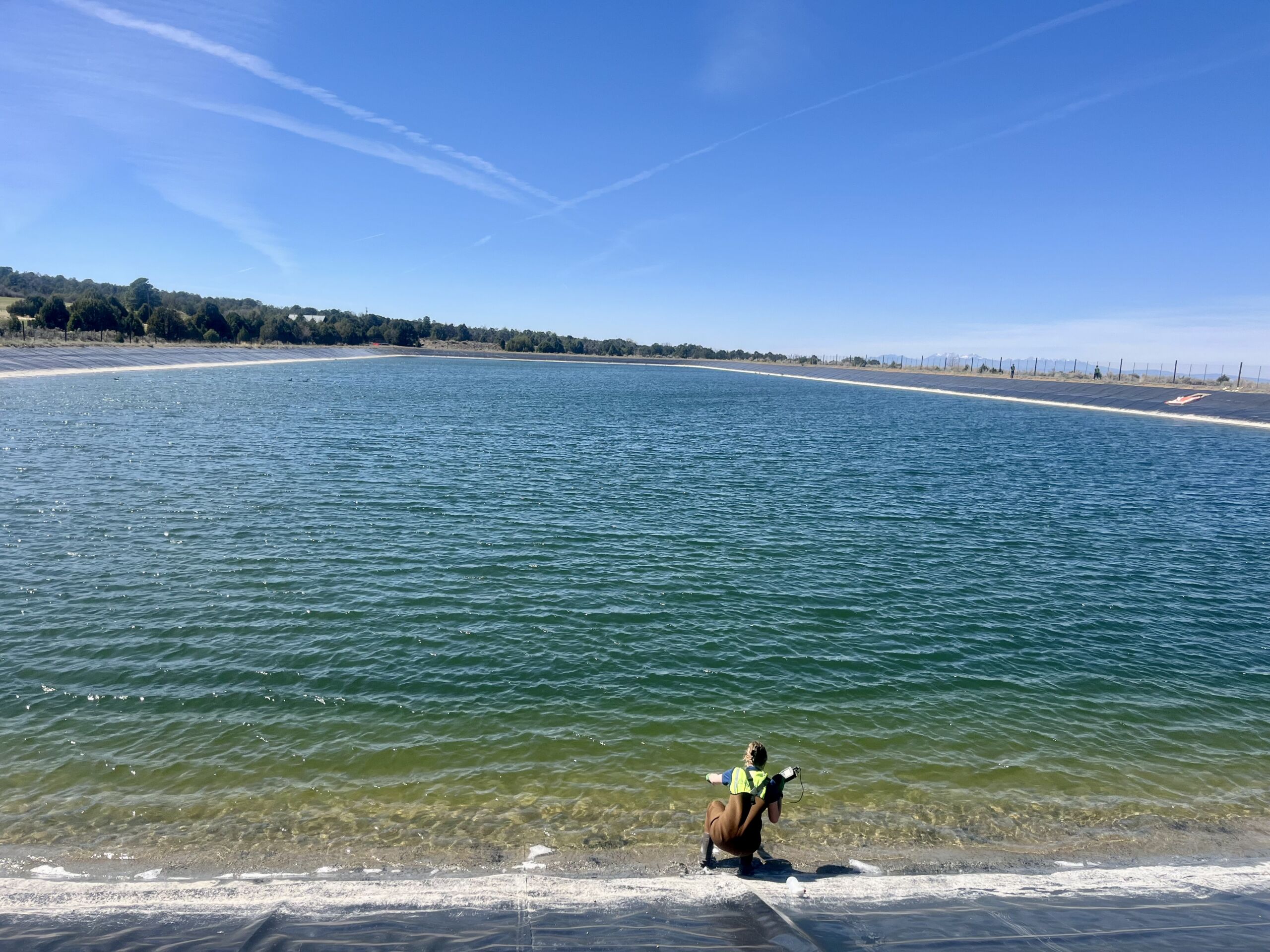
Norwood is teaming up with EcoAction Partners and the Colorado School of Mines to explore floatovoltaics - floating solar panels - to reduce evaporation, prevent algae blooms, and generate renewable energy.

Spawn of the Subhuman Comes to the Airwaves
January 22, 2026
A hijacked plane, an evil scientist and a celebrity-turned-gorilla collide in Spawn of the Subhuman, a delightfully over-the-top radio play produced by N3 Music & Theatre Club. Directed by Brock Benson and performed by local middle school students, the reimagined 1942 script blends campy sci-fi, sharp humor and heartfelt community storytelling — proving that radio theater can be both hilarious and deeply meaningful.

Remembering Kirk Alexander
December 4, 2025
Kirk Alexander, a lifelong rancher and respected Norwood community member, died Sunday, Nov. 30, at 98.
Born in 1927 in what is now Lawson Hill, Alexander carried on a family ranching tradition in San Miguel County dating back to the early 1800s.